
Western Pennsylvania Appalachia, family folklore, and what gets lost when the internet plays a game of telephone
It started, as most rabbit holes do, somewhere else entirely.
I had been thinking about Ireland. Ghost stories, folklore, old superstitions, the things people carried with them long before anyone thought to call them folklore. Ireland felt like an obvious place to wander for a while, especially if the eventual question was going to be something like: Why do we tell ghost stories?
Then I remembered where my grandmother is from.
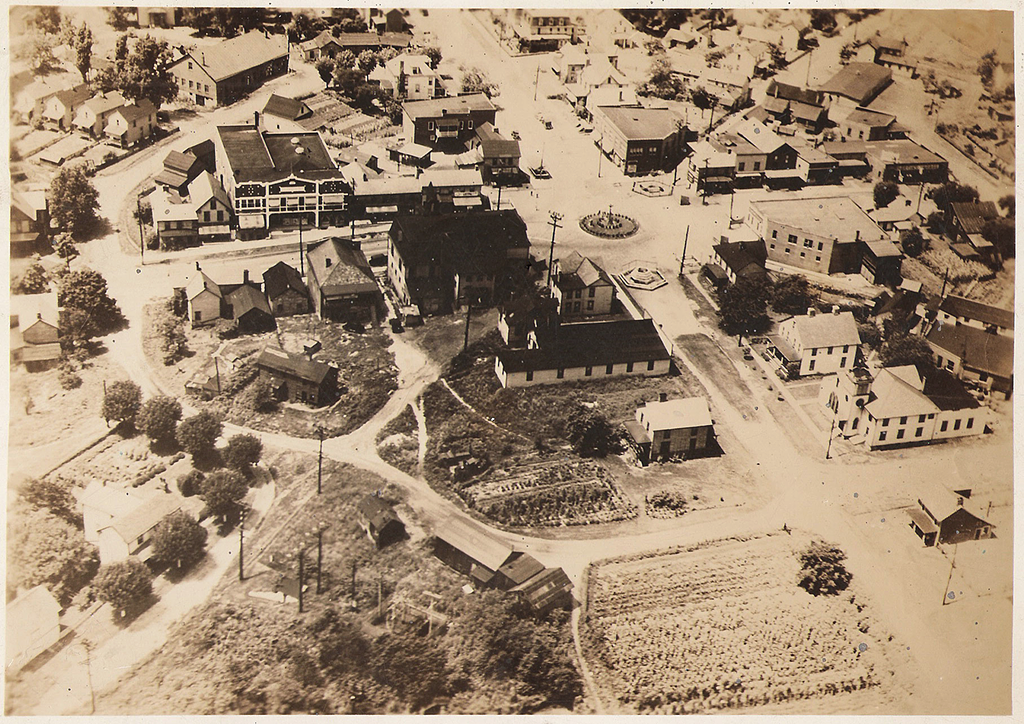
My mothers side of the family is from Perryopolis, Pennsylvania, a small town in Fayette County about thirty miles southeast of Pittsburgh (really, from Layton, but it’s so small it was incorporated into Perryopolis). My grandmother grew up there. She can still tell me what the town was like, where people lived, what people did, what they believed, what they warned children about, and—hopefully—what people said when something happened that couldn't quite be explained.
And Perryopolis, it turns out, is Appalachia.
Not Appalachia in the way the internet has taught many of us to picture it. Not necessarily a cabin tucked deep inside a mist-covered hollow somewhere in West Virginia or eastern Kentucky; although my grandma does refer to living “in the holler”. Appalachia is much larger and more varied than that image. The Appalachian Regional Commission defines the region as 423 counties stretching from southern New York to northern Mississippi, including a large portion of Pennsylvania.
Perryopolis sits within that northern Appalachian landscape, in a part of southwestern Pennsylvania shaped by rivers, farms, mills, coal mines, coke ovens, immigrant communities, churches, company towns, industrial decline, and generations of families who stayed long enough for stories to accumulate.
Suddenly Ireland wasn't the rabbit hole anymore. Or maybe it wasn't the first one.
Because before I go looking across an ocean for old stories, I want to know which ones might already be sitting at my grandmother's kitchen table.
The Appalachia the Internet Gave Us
If you've spent any time on the folklore side of TikTok, you've probably encountered The Rules of Appalachia.
Don't whistle in the woods after dark.
If you hear your name being called from the trees, no you didn't.
If something whistles at you, don't whistle back.
If the woods suddenly go silent, leave.
And whatever you do, apparently, do not look too closely at the tree line.
They are wonderfully creepy. They are also a perfect example of why I want to dig a little deeper.
The “rules” have become their own form of contemporary folklore, repeated across TikTok, podcasts, Reddit, horror accounts, and websites until Appalachia itself begins to feel like one enormous haunted forest governed by an ancient supernatural rulebook. Even sources discussing the trend acknowledge that these viral lists mix older superstition, family traditions, practical wilderness advice, ghost stories, and newer internet horror and that some of the supposedly universal rules are difficult to trace historically.
That doesn't make them uninteresting. Quite the opposite.
Folklore doesn't stop becoming folklore because it happens on TikTok. The Pennsylvania Center for Folklore describes folklore broadly as cultural traditions that include storytelling, rituals, beliefs, music, crafts, festivals, and even the ways media and technology participate in creating and transmitting traditions.
The internet may simply be doing what people have always done: taking a story, changing it slightly, passing it along, and watching to see what survives. A game of telephone.
But something gets flattened when we talk about Appalachian folklore as if thirteen states and hundreds of counties share a single set of supernatural beliefs.
I don't want to research a spooky version of Appalachia built primarily for people outside of it. I want to know what people actually said. More specifically, I want to know what people in western Pennsylvania said.
A Different Kind of Appalachia
Southwestern Pennsylvania has its own particular version of Appalachian history.
This was farm and mill country before it became coal and coke country. Later, mines and industrial communities transformed the region, bringing waves of workers and immigrants whose traditions existed alongside families with German, Scots-Irish, English, and other roots.
That mixture matters.
The Pennsylvania Center for Folklore's archival guide points researchers toward western Pennsylvania coal-mining collections as well as traditions from Pennsylvania German, Irish, Lithuanian, Slavonic, Jewish, Italian American, and other communities across the commonwealth. The Library of Congress collections alone include occupational folklore from bituminous miners alongside music, religious traditions, and oral material from numerous ethnic communities.
Which means there probably isn't one tidy thing called western Pennsylvania Appalachian folklore waiting for me to uncover.
There are layers.
A mining superstition beside a Catholic prayer.
A German healing practice beside an Irish death belief.
Something a Slovak grandmother carried across the Atlantic that eventually became simply what our family does.
A warning originally meant to keep children away from a dangerous mine that, three generations later, has become a story about something that lives there.
A dream about a dead relative.
A bird hitting a window.
A house everyone in town knew wasn't quite right.
Someone people went to when medicine wasn't helping.
A woman remembered as a healer by one family and a witch by another.
This is where the rabbit hole becomes considerably more interesting to me than a collection of scary stories. Because I don't just want to know what people believed. I want to know why certain beliefs survived.
The Stories Nobody Called Folklore
One of the resources we'll eventually explore is Penn State's Pennsylvania Folk Belief Collection, compiled by folklorist Mac E. Barrick.
Barrick collected material throughout the 1960s, '70s, and '80s, eventually accumulating more than 100,000 index cards documenting folk belief, folk medicine, narratives, games, speech, and other traditions. Much of his fieldwork came from Pennsylvania tradition-bearers with German and Scots-Irish backgrounds.
That collection immediately changed the way I was thinking about this project.
Because folklore isn't only a ghost appearing at the end of a dark road.
It is also:
Don't put that there.
You'll bring bad luck.
My mother always said…
We never did that after someone died.
Your great-grandmother could tell when…
There was a woman people went to when…
Everybody knew not to go down there.
Those sentences interest me almost more than the ghosts do.
Most people probably wouldn't describe their grandmother's household rules as folk belief. Their grandmother certainly might not have. It's just what you did. And that means some of the best pieces of this rabbit hole may never appear in a book at all.
They may be sitting inside the memories of people who don't realize they're carrying folklore. Including my grandmother. So I'm starting there.
Before I read enough about Appalachian folklore to know what answers I'm looking for, I want to ask her what Perryopolis was like when she was a child.
Where did everyone live?
Where did children play?
Were there places they weren't supposed to go?
Were there houses people talked about?
What happened when someone died?
What did her mother believe brought bad luck?
Did anyone believe dreams meant something?
Did people tell ghost stories?
Was there anyone people thought could heal things other people couldn't?
Were there stories about mines, roads, cemeteries, rivers, or the woods?
And the question I suspect may unlock everything:
What did your grandmother believe that people today would think was strange?
Maybe she remembers nothing. That's part of the experiment too. But I have a suspicion that asking someone whether they grew up with “folklore” gets you a very different answer than asking: What did people always say?
Where We're Going First
Rather than trying to swallow all of Appalachia at once, I'm giving this rabbit hole boundaries.
We're starting in Perryopolis and Fayette County and working outward.
First comes place: understanding the town my grandmother knew, the surrounding communities, the rivers, churches, cemeteries, farms, mines, mills, roads, and coal patches that made up everyday life.
Then we're meeting Moll Derry, the so-called Witch of the Monongahela, a Fayette County woman whose life became tangled with stories of fortune-telling, healing, curses, prophecy, and witchcraft. I'm particularly interested in trying to find the woman underneath the legend and asking why communities turn certain women into witches in the first place.
From there, we'll explore folk healers and folk magic, including the Pennsylvania traditions in which prayer, remedies, charms, Christianity, healing, and supernatural belief weren't necessarily as separate as we might imagine today.
Then we'll move into death omens and dreams: birds, knocks, clocks, visions, visitations, funeral customs, and those unsettling family stories where someone somehow knew a loved one had died before anyone told them.
We'll go underground into coal-country folklore and look at the beliefs that grow around dangerous work: premonitions, mine disasters, strange sounds, warnings, abandoned places, and whether some ghost stories functioned less as entertainment than as ways of making unpredictable danger understandable.
We'll follow the haunted roads, bridges, cemeteries, swimming holes, and places teenagers dared one another to visit.
We'll look at stories in which real people become monsters, and ask what gets erased when a community turns an outsider, an eccentric woman, a disabled person, an immigrant family, or simply someone who lived differently into the frightening character in a local legend.
We'll look at immigration and ask what happens when beliefs cross an ocean and settle somewhere new. And eventually, we'll return to those ordinary family superstitions—the ones so mundane that nobody bothered to write them down.
The goal isn't to prove whether any of it was real. I'm much more interested in another question:
What was the story doing?
Was it protecting children?
Explaining an unexpected death?
Making dangerous work feel slightly more controllable?
Keeping someone's memory alive?
Giving grief somewhere to go?
Preserving a tradition after everyone had forgotten its origin?
Creating a monster out of someone the community didn't understand?
Or simply giving people something to say when the world did something strange?
The Rabbit Hole Begins at Home
There's something wonderfully backwards about researching folklore in 2026. I could open TikTok tonight and find hundreds of people telling me the rules of Appalachia. Instead, I'm going to call my grandmother. Because I'm beginning to suspect that the most interesting folklore isn't always the story everyone knows.
Sometimes it's the thing one family kept doing long after anyone remembered why. Sometimes it's a warning attached to a particular road. Sometimes it's a phrase you heard so often as a child that it never occurred to you to ask where it came from. Sometimes it's a dead relative who appeared in someone's dream. And sometimes a story travels so far that by the time it reaches you, the people who started telling it are gone.
That's what I want to follow. Not just the ghosts of Appalachia.
The stories people carried. The ones they changed. The ones they forgot they were carrying. And the ones that somehow made it all the way to us.
Welcome to the rabbit hole.
The Rabbit Hole Guide
We'll be following this roughly in this order:
Perryopolis Before the Ghosts — mapping my grandmother's town and the places where stories lived.
Moll Derry, Witch of the Monongahela — separating a Fayette County woman from the legend built around her.
Witches, Healers & Folk Magic — the blurry line between faith, medicine, superstition, and magic.
Someone Knew Before the Phone Rang — death omens, dreams, visitations, and family stories of knowing.
Ghosts Underground — coal mines, dangerous work, disaster, and occupational folklore.
Don't Go Down That Road — haunted roads, cemeteries, rivers, bridges, and warnings disguised as ghost stories.
When Real People Become Monsters — what local legends can do to the people inside them.
What Came Across the Ocean — immigrant traditions meeting Appalachian life.
Grandma Always Said… — ordinary superstition and the beliefs nobody thought to document.
How a Story Changes — comparing the historical record, published folklore, and what families remember.
Pennsylvania has unusually rich resources for doing this work, including Penn State's Pennsylvania Folk Belief Collection, the Pennsylvania Center for Folklore's network of archives, western Pennsylvania coal-culture collections, historical societies, and Library of Congress folklife material.
But we're starting smaller. One town. One family. One grandmother. And whatever she remembers.
