
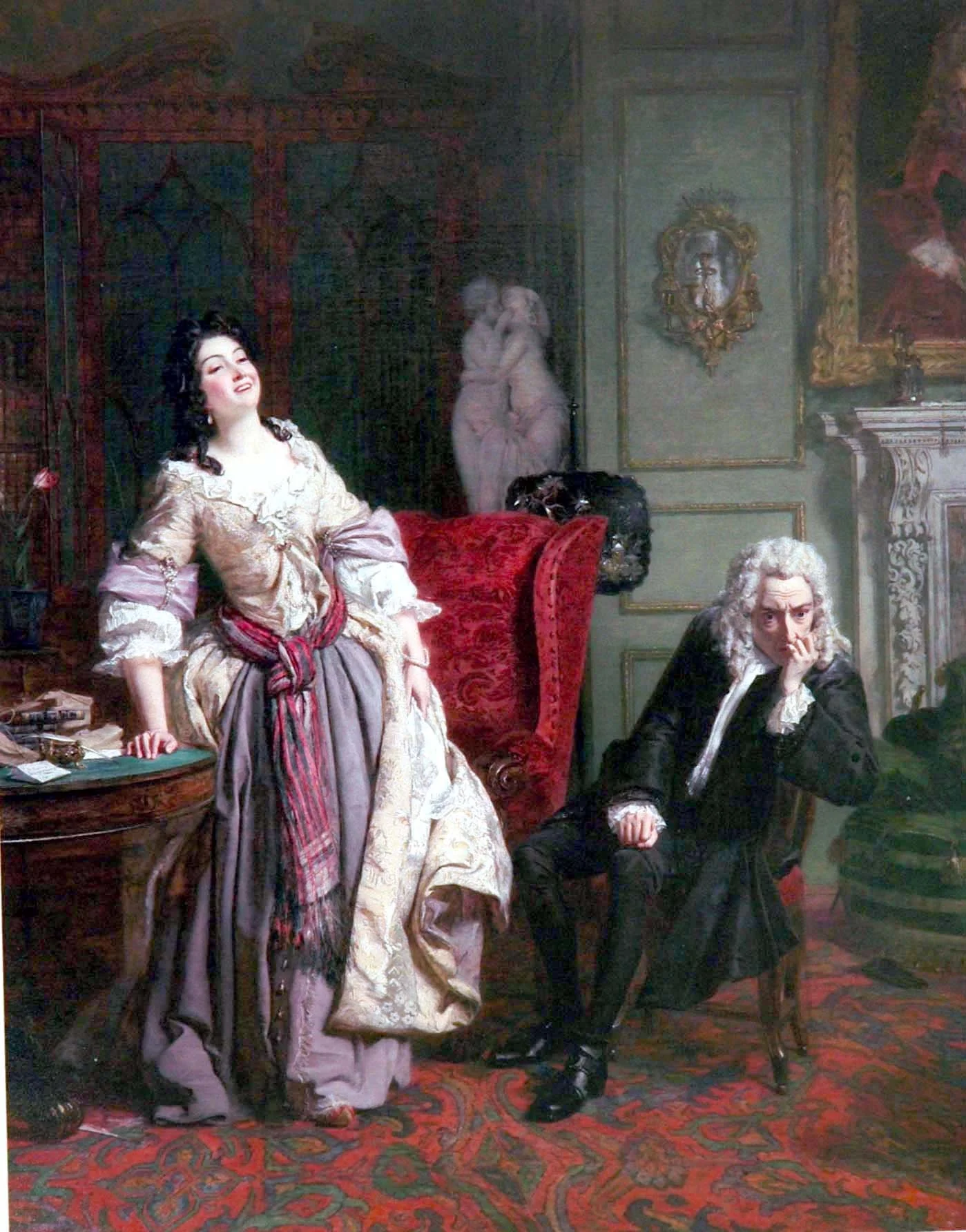
The Loophole in the Drawing Room
When I talk about reviving the “Republic of Letters,” I’m met with a valid question: Why look back at an era built on the backs of the oppressed? It’s a fair critique. The Enlightenment salons were funded by systems we are still trying to deconstruct today. The gold on the walls and the leisure to “think” were luxuries bought with a heavy price. But history is rarely a straight line, and it’s never just one story.
For the women of that time, the salon wasn’t just a party; it was a loophole. In a world that shut them out of universities and political chambers, these private gatherings were the one place they could slip through the cracks and actually engage in the intellectual life of their era. They didn’t own the building, but they owned the conversation. They were subverting a system from the inside out. They taught us that you can find a sanctuary for the mind even when the architecture around you is flawed.
SIDEBAR: While I focus on the structural strategy of the women who occupied these spaces, my creative partner at Xolo Legacy Collective reminds us that we also have to look at the ground the building stands on. The Enlightenment salons were funded by a literal mountain of extracted wealth and colonial conquest. It’s a vital tension to hold: recognizing the genius of the "loophole" while acknowledging the blood in the mortar. You can read her full archaeological audit of this era here.
The Evolution of the Loophole
We have to acknowledge that the “loophole” of the 18th-century salon was still a gated one. Even within those walls, there was deep exclusion. Women like Dido Elizabeth Belle lived in the heart of these intellectual houses but were often only allowed to join the conversation after the dishes were cleared; existing in a constant state of being present but not fully seen. They occupied a narrow space between a world of high ideas and a system that refused to grant them full humanity.
But the story didn’t stop there. The “Republic of Letters” eventually evolved, finding its truest and most revolutionary form when it was seized by those who had been excluded. We see this in the Harlem Renaissance, where women like Georgia Douglas Johnson and A’Lelia Walker hosted salons that became the engine for a new culture. They took the “private drawing room” and turned it into a sanctuary for writers like Zora Neale Hurston to dismantle the old narratives and build something whole. They proved that when you open the loophole to everyone, it doesn’t just share knowledge… it changes the world.
The Digital Salon and the “Nazi” Problem
Today, our “salons” are digital platforms like Substack. It’s where we go to bypass the modern gatekeepers and speak directly to one another. But as The Guardian recently revealed, the soil of this modern republic is contaminated. The platform’s “freedom of speech” stance has allowed them to profit from newsletters that don’t just offer “different opinions,” but actively incite hate and boost Nazi narratives through algorithms.
Substack failed to comment for the latest report, but they have addressed this tension previously. In a December 2023 statement, their leadership made it clear that while they don’t like these views, they don’t believe in "censorship" or demonetizing extreme publications. Their defense is that "supporting individual rights and civil liberties while subjecting ideas to open discourse is the best way to strip bad ideas of their power"—the classic argument that sunlight is the best disinfectant.
But as Xolo Legacy Collective recently pointed out, there is a massive difference between a difference of opinion and a platform for hate. When the discourse turns into a tool for violence, “freedom” becomes a hollow shield. We have to ask ourselves: at what point does “hosting a conversation” become “funding a movement”?
The Choice: Abandonment vs. Occupation
So, do we walk away? If the platform is stained, do we retreat to a new corner of the internet?
If everyone who believes in empathy, critical thinking, and decolonization leaves, we are effectively handing the keys to the kingdom over to extremists. We leave behind a vacuum that hate is all too happy to fill. If the sane voices exit, the platform doesn’t just go silent; it becomes an echo chamber for the worst parts of our history. As Xolo Legacy Collective so poignantly said: We have to win the battle for that narrative. If we fail to learn the lessons of the past, we’re doomed to repeat them.
Building the Middle Ground
I believe we can build a middle ground; a sanctuary that acknowledges the ghosts in the room but refuses to let them have the last word. We aren’t here to celebrate the gold and conquest of the past, nor are we here to ignore the calculated ideologies of hate in the present.
We are here to occupy the space with a different kind of rigor. It’s about a duality of work:
The External Work: Looking at the ancestral and systemic boxes built through history and colonialism. It’s about calling the wounds by their names so they can finally stop festering.
The Internal Work: Navigating the trauma, grief, and resilience that live within those boxes. Using intentional tools and personal reflection to ensure we don’t lose our humanity while we fight the systems.
We are staying because we refuse to let narratives of supremacy and division define the world. We are using the “loophole” once again; turning a flawed platform into a sanctuary for the truth. Because nothing born of harm endures forever, but the connections we build in this middle ground, grounded in real history and soul-work, just might.
If the sane voices leave the room, who are we leaving the keys to? I'm curious… what makes you stay and do the work when the ground itself is contaminated?
