
From Babitz to the Copycat: Why everyone is racing to be first (even when they’re late).
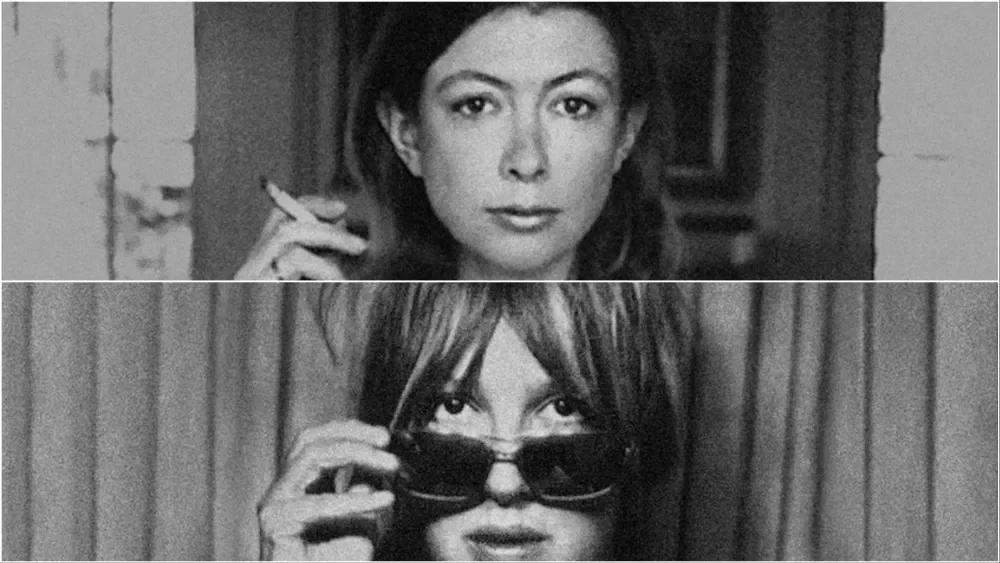
I recently fell down a literary rabbit hole that started with a single, sharp question: “Could you write what you write if you weren’t so tiny, Joan?” That line comes from a famously unsent letter written by Eve Babitz to Joan Didion in the early ‘70s. It’s a masterpiece of the “poison pen” genre. It wasn’t just a dig at Didion’s height; it was an accusation that Joan’s fragile, bird-like persona was a calculated shield used to get away with being a ruthless observer. It’s the ultimate artifact of the modern-day frenemy dynamic; that specific moment where admiration curdles into a desperate need to deconstruct the other person’s success. It made me realize that some people don’t just want to be your friend; they want to be your “twin,” but with a faster delivery date.
The Merge
This copycat energy isn’t just a modern social media glitch; it’s a historic pattern of behavior. Look at Elizabeth Taylor and Debbie Reynolds. Before the tabloid drama over Eddie Fisher, they were the quintessential Hollywood duo, but their friendship was a constant friction of personas. Debbie was the “Good Girl,” the one who played by the rules and built a wholesome brand. Elizabeth was the “Siren.” When the “Good Girl” lane felt too safe or stagnant, the friction didn’t just cause a spark; it caused a fire. History shows us that when a person feels stuck or “lane-less,” they often try to merge into yours. They aren’t looking for their own exit; they’re looking for your GPS coordinates so they can get to the destination five minutes before you do.
Note: This usually happens right when your car starts looking like it’s actually going somewhere interesting.
The Hijack
Following that lead, I stumbled upon the legendary mess between Truman Capote and Harper Lee. They were childhood best friends, but when Lee’s steady, quiet construction of a single, perfect novel resulted in a Pulitzer for To Kill a Mockingbird, Capote’s jealousy became a parasite. He spent years subtly hinting that he had basically ghostwritten the book for her. He couldn’t stand that her “first attempt” was more beloved than his own output, so he tried to claim ownership of her vision. It seems there is a specific type of person who is driven by a scarcity mindset, the belief that there is only one seat at the table, and if they don’t sit in it first, it’s gone. They don’t just watch you build something; they try to build a faster, cheaper version of it while you’re still in the workshop.
The Stealth Phase
This is the hallmark of the modern-day frenemy, the person who watches you develop a unique style or a specific new project, and suddenly pivots their entire vibe to match yours. We see this play out in real-time on TikTok, where “Copycat Culture” has become its own sub-genre. One creator develops a specific, quirky way of storytelling or a unique get ready with me aesthetic, and within forty-eight hours, five of their “friends” have adopted the same cadence, the same lighting, and the same talking points. It’s Mean Girl energy disguised as a Side Hustle. They rush out a low-rent version of your idea, trying to plant their flag first so that by the time you go public, it looks like you’re the one following them. This is why we are seeing a return to stealth mode. Working in private isn’t about being sneaky; it’s about protecting your peace and giving your ideas enough quiet to develop their own soul. You are not a tree; if the soil in your current circle is full of people trying to harvest your fruit before it’s even ripe, you can move.
The Fermentation
The truth is that being a copycat is an exhausting way to live, and being the one with the original blueprint can be a lonely way to build. But whether it’s a letter from 1970 or a reel from 2026, the world eventually differentiates between the performance and the source. Think of it like a bakery. Two people can open a shop on the same street. One might be fast and cheap, rushing out “Fast Bread” because they saw you buying flour. But the other person is in the back, letting the sourdough ferment for forty-eight hours. Babitz’s letter stayed in a box for decades because, despite its wit, it was a reaction to someone else’s existence. Joan, meanwhile, just kept building her own world. You can copy the recipe, but you can’t copy the patience. Quality has a frequency that speed simply cannot mimic. Take your blueprints into the workshop and let them grow in the dark. The foundation will always be too solid for anyone to claim they built it for you once you finally open the doors.
